


Shandon Woodland Community Group
Meet the Trees
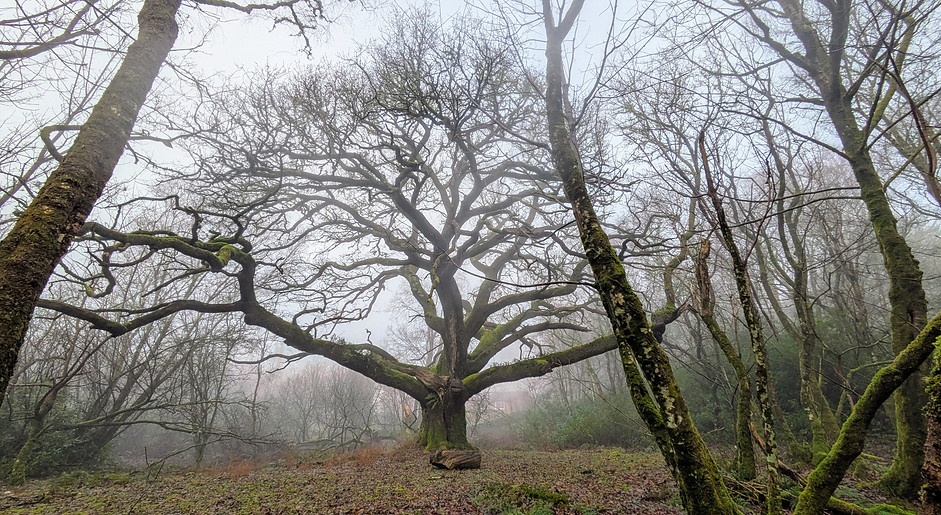
Auld Croovie | A veteran oak (Quercus sp.), approximately 300 years old, growing since at least 1725 indicative of exceptional ecological value.
For thousands of years, the entire hill on which Shandon sits would have been covered in tree - oak, alder, rowan, hazel, birch and Scots pine blanketing even the upper slopes. Over time, humans cut and grazed these woods to near extinction, but what remains in Shandon Woodland are precious pockets that tell this history.
Across approximately 235 acres, the trees play a prominent role in the health and diversity of the woodland today. Parts are listed on the Ancient Woodland Inventory, containing veteran trees and ancient woodland that has persisted for centuries, including riparian woodlands along our watercourses that were noted in medieval times when such areas were protected by custom or law. The landscape continues to develop, with native species regenerating on former estate grounds and sycamore woodland establishing itself through natural regeneration and planting on railway slopes and open ground. From ancient veterans providing irreplaceable habitat to newly establishing trees creating tomorrow's woodland, each contributes to the ecological richness of this living landscape. Join us as we introduce you to some of the remarkable trees that call Shandon home.
Tree Species
Scroll through the slideshow to learn more about each tree species in Shandon Woodland.
Oak
Britain's most important ancient woodland tree, the pedunculate oak lives 500-1000 years and reaches 30-40m tall. A symbol of strength, it supports over 2,000 species. Sacred to Druids and an ancient woodland indicator in Scotland.

The Story of Auld Croovie
Shandon woodland contains a magnificent old oak called by the community, 'Auld Croovie' after a traditional Scottish folktale. The oak sits on Ministry of Defence land. We're grateful to Tom Muir for the generous permission to reproduce his telling of the story here and to Kate Leiper for permission to reproduce her illustration.
Ancient Woodland Inventory
Shandon Woodland contains ancient woodland as recorded in Scotland's Ancient Woodland Inventory – the official record of sites existing continuously since at least 1750. These irreplaceable habitats support unique species that depend on centuries of ecological continuity.
Scotland's native broadleaf ancient woodland survives in only tiny, fragmented pockets covering less than 1% of Scotland's land area, making Shandon's 235 acres part of this precious heritage.
Inclusion in the inventory provides recognition and policy protection, safeguarding these sites from inappropriate development. The inventory is being updated in 2026 to reflect improved mapping and historical research.
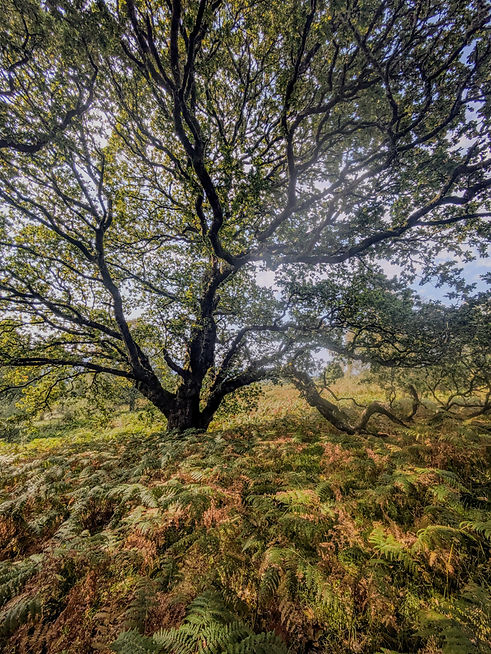
Ancient Tree Inventory
Some of Shandon Woodland trees are included in the Woodland Trust's Ancient Tree Inventory.
Select the map and then enter: Shandon, Helensburgh into the search bar to see pictures and details about each tree.

Something wrong?
Scotland's trees are under threat from a range of pests and diseases. You can help by knowing what to look out for.
Download our quick reference guide on the top 5 priority pests and diseases affecting Scottish trees, based on a Community Woodlands Association webinar on tree health and biosecurity.
Spotted something in Shandon Woodland?
If you notice a tree that looks unwell, dying, or just a bit strange, please contact us with its location: shandonwoodlandcommunitygroup@gmail.com


